
How to Cook Fresh Raw Peanuts
It’s that time of year again—fresh, raw peanuts are showing up in farmer’s markets and grocery stores. And you know what that means…boiled peanut season! This Southern favorite is salty, soft, and oh-so-addictive. If you’ve never made them at home, now’s the perfect time to give it a try.
I’ve made three batches over the last few weeks and after I posted a pic on Facebook, some people had some questions.
Watch the Video!
Questions
Why would anyone WANT to boil peanuts?
Well, we like the taste of them.))) There’s just something about that salty, soft bite that keeps us coming back for more.)))
I never heard of boiled peanuts.
It may just be a regional thing—we’re from the South.))) Around here, boiled peanuts are as common as sweet tea in the summertime.)))
For those who’ve never tried them, the texture is very different from roasted peanuts. They’re softer, almost like a bean, with a salty flavor that soaks all the way through the shell. Some folks like them plain, others season them up with Cajun spices or garlic, but either way, they’re a true Southern snack.))).
How do you boil peanuts?
I’m going to show you how.))) It’s really very simple—you just need fresh raw peanuts, plenty of water, and salt. Some folks like to throw in extra seasonings, but the basics never change.)))
How many peanuts, how much water, how much salt?
Stay tuned.
History
I grew up in the South and still live only about 15 miles from my childhood home—same for my husband. My family always planted peanuts, whether in the garden or the truck patch. Mother could always find room for a couple of rows, no matter how small the garden seemed.
Pulling up the plants and picking off peanuts is a memory I grew up with, but it’s an experience my child never had and my grandchildren probably never will. So in a way, this post is a little history lesson for them—should they ever decide to read my blog.)))
Planting Peanuts
Mother and Daddy always planted the peanuts. Sometimes they’d have us kids follow behind them in the garden, dropping a couple of dried peanuts in the hull into the row. They’d make a small trench, and we’d place the peanuts about every 12 inches or so—at least, as best as I remember.
When it came time to harvest, Daddy was always the one to decide if the plants were ready to pull. Too early, and the peanuts wouldn’t be filled out completely. Too late, and wet weather could set in and cause them to spoil in the ground. Timing was everything, and Daddy knew just when the moment was right.
Harvesting Peanuts
In our part of the South, peanuts were usually ready to pull in the fall. Once Daddy decided the time was right, he did the pulling himself. It was careful work, because the whole plant came up with the peanuts still clinging to the roots. I can still remember the smell of the freshly turned soil and the sight of those dirt-covered shells hanging in clusters from the plants. A good harvest meant full, plump peanuts—perfect for drying, roasting, or putting straight into the pot for boiling.
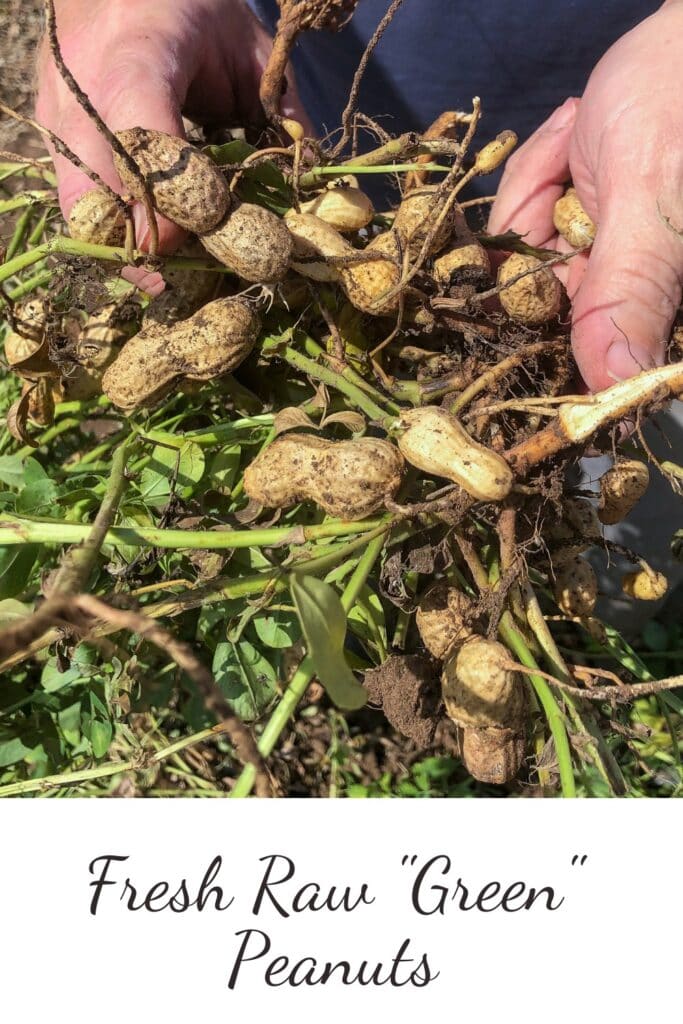
As kids, we would follow along behind Daddy, piling the peanut plants into a wheelbarrow or carrying an armful over to the water hydrant. We’d shake off as much dirt as we could, then wash away the rest with the water hose. Our job was to pull the peanuts off the plants—messy work, but fun when you’re little. These freshly picked peanuts were called “green” or raw peanuts, and they were just right for boiling.
Raw “Green” Peanuts
Now, you may see packaged peanuts labeled “raw,” but that doesn’t mean they’re “green.” Green doesn’t refer to the color—it simply means fresh. Not dried, not roasted, just freshly pulled from the ground.
These are the peanuts you boil. Don’t try to boil dried peanuts—they’re meant for roasting or parching, not boiling.
Once we had cleaned and pulled the peanuts off the plants, we’d spread them out in a single layer on a clean sheet, an old tablecloth, or something similar. This gave them a chance to dry a bit and made it easier to sort through before cooking.
Drying Process
This is how I remember it. We’d dry peanuts in the sun, but if rain came, they had to be carried inside right away. Once dried, they were stored in sacks or pillowcases and hung in the pantry.
I don’t recall exactly how long the process took—maybe a couple of weeks—but I do remember that if the peanuts got wet, you were in trouble. And if a mouse found them first, well…that made everybody mad as heck!)))
Depending on the size of the crop, there might be enough peanuts to fill a burlap “toe sack.” Why they were called toe sacks, I’ll never know. (If you do, leave me a comment!))) Usually, that kind of volume came from the truck patch peanuts.
I also had an uncle you could always count on for plenty of peanuts. Even though he lived alone, he planted a truck patch full every year and seemed to supply the whole community.)))
Of course, nowadays you don’t have to go to all that trouble. You can usually find fresh or “green” peanuts by the pound in grocery stores or farmer’s markets in the fall. They may be available more widely in other parts of the country, but around here, fall is the only season for them.
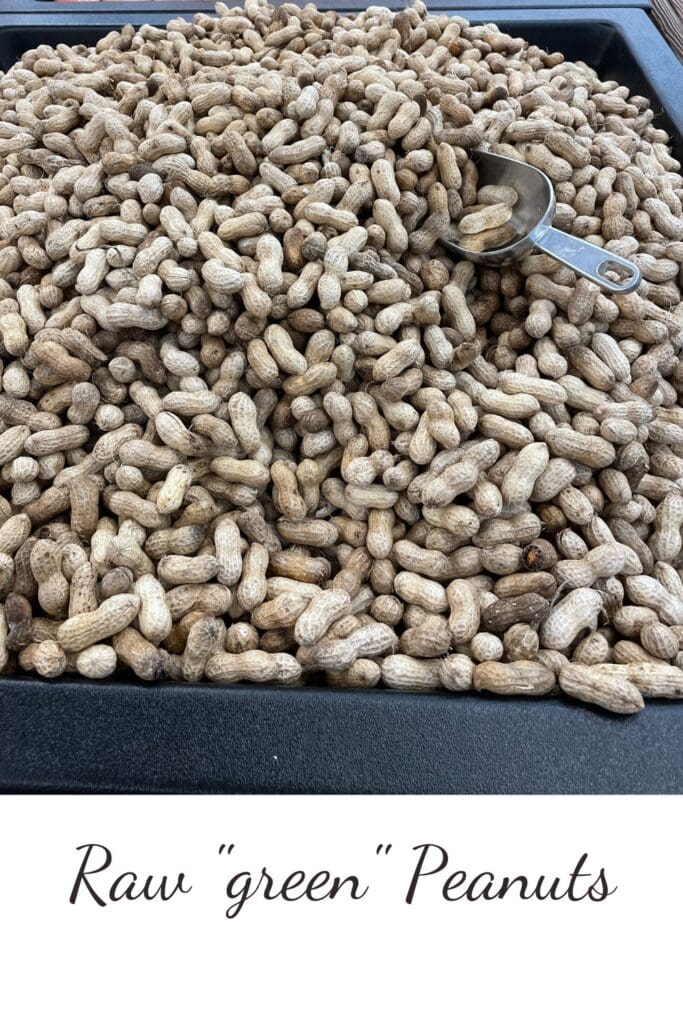
I bought my peanuts at Walmart. Raw, green peanuts will be moist to the touch. Raw dried peanuts will rattle when you shake them. Some stores will keep green peanuts in the cooler.
Boiling Peanuts
Mother always kept some of the green peanuts in the refrigerator just for boiling. She’d use a big pan or Dutch oven, add a generous amount of salt, and let them simmer on the stove until tender.
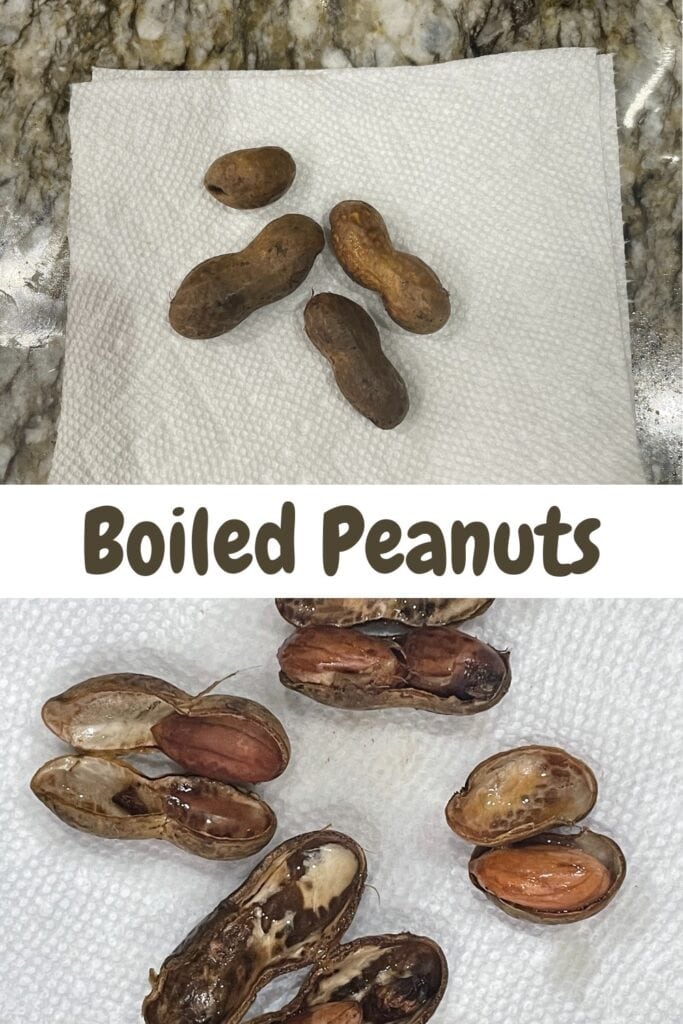
That’s how I fixed them for years too—simple and straight from the stovetop. Once boiled, peanuts take on a whole new taste and texture. They’re soft, almost like a black-eyed pea, with a salty flavor that makes them addictive.
They may not be the prettiest snack you’ll ever see, but trust me—they’re worth it!)))
Anyway, boiled peanuts were always a treat when we were growing up. Once the peanuts had dried too much for boiling, we would “parch” them in the oven in a shallow pan. You had to keep an eye on them—just the right amount of heat brought out that nutty flavor, but let them go too long and they’d burn. Some folks call that roasting, but to us it was always parching.
Even now, we like to buy dried peanuts and roast (or parch) them ourselves. They just taste fresher that way compared to the bagged roasted peanuts from the store—though you’ll still find a jar of Planters salted peanuts in our pantry at any given time.
But for this post, I want to share a new way we’ve been enjoying them—crockpot boiled peanuts. They’re easy, hands-off, and the slow simmer gives them the same salty, soft flavor we loved as kids.)))
Crockpot Peanuts
I was in Walmart picking up green peanuts when a gentleman about my age asked what I planned to do with them. I told him I’d boil them, and he leaned closer and said, “Have you ever cooked them in a crockpot?” I hadn’t, but he insisted it was the best way—just add water, salt, and let them cook all night.
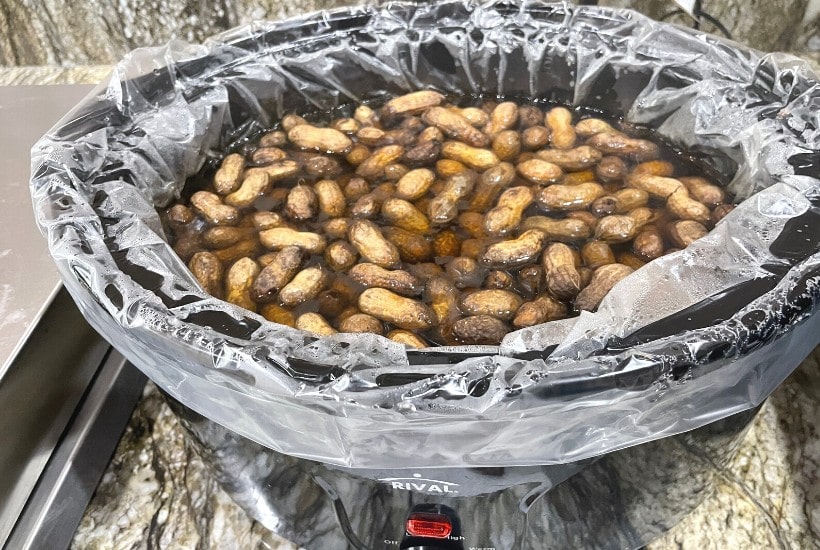
So, I tried it! Washed the peanuts, tossed them in the crockpot (you don’t need a liner, but I used one), covered with water, added salt, and left them overnight.
Boiled peanuts may not be for everyone, but they’re one of those foods tied to good memories. And I have to thank the kind man at Walmart—he gets the credit for this recipe!)))
- 2 pounds of peanuts (approx) (raw, not dried)
- 3 quarts of water (more or less depending on taste)
- 1/4 cup of salt (may need more when finished)
- Start the crockpot on high and turn it down to low once it’s hot, leave overnight, and check peanuts for tenderness the next morning. Or you can boil them on the stove for a couple of hours or until tender.
Store in the refrigerator. When I have a large amount left over, I place them in small serving-size ziplock bags and they keep for months.
Enjoy!
More from My Kitchen

Boiled Peanuts
Equipment
Ingredients
- 2 Lb Peanuts (raw, not dried) 2# approx
- 3 Qt Water
- ¼ Cup Salt (more or less depending on taste)
Instructions
- Wash peanuts. Raw or "green" peanuts are moist to touch, and only available in most places in the fall. Peanuts used for boiling have never been dried or roasted. Place washed peanuts in crockpot. I used a liner but it's not necessary.
- Cover with about 3 quarts of water. Cover and cook overnight. When the peanuts are cooked, the water will be brownish and peanuts will contain some water, this is normal. Add more salt if needed. Drain, eat while hot, or store in plastic bags in the frig. They can also be stored in the freezer. If stored in freezer, thaw in the refrigerator.
Nutrition


Jeannie,
I always relate to your posts, they bring back lots of memories for me. This one was no exception. My great grandfather, Papa, had a small farm in Georgia and grew peanuts in his garden. I remember going to his house when I was young and always running to his “back room” to see if he had any peanuts. They were always hanging in a burlap bag. He’s been gone for many years but that is such a fond memory for me. We “parched” our peanuts too! Thanks again!
Janet Koch
Thank you for following Janet. My grandparents had a “back room” too…..this is where they kept the watermelons under the bed))))