You Might Be from the South If You’ve Lost a Lawn Chair to Kudzu
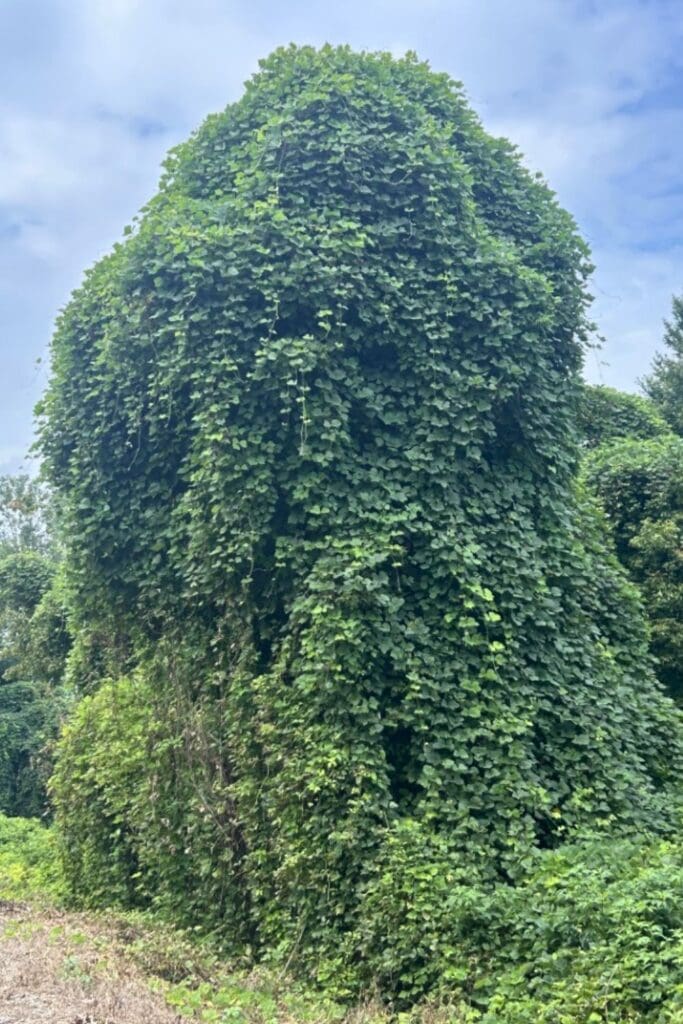
I grew up in the South, and if there’s one thing I’ve always been sure of, it’s this: kudzu isn’t just a plant—it’s a lifestyle. Down here, it covers everything that doesn’t move (and some things that do). Trees, fences, light posts, barns, old cars… if it stands still long enough, kudzu claims it. Practically overnight. Just last week, while biking along the Tanglefoot Trail, I spotted a tree so completely swallowed by kudzu it looked like a green ghost. That vine’s been part of my Southern scenery for as long as I can remember—but this time, I got curious. Beyond the whole “soil conservation during the Great Depression” story, does kudzu actually do anything useful? Or is it just Mother Nature’s version of cling wrap gone rogue?
How Did We Get Here?
If you’ve ever wondered who we can thank for our kudzu-covered countryside, look no further than the CCC boys—the Civilian Conservation Corps. My grandparents used to talk about them with a mix of admiration and fondness. These young men, often barely out of high school, worked for the federal government during the Great Depression, doing everything from planting trees to building roads and park shelters. There was a CCC camp not far from where my grandparents lived, and my grandmother gave them fresh milk from the barn and eggs, sometimes cooking up a little something for them too—because planting the South wasn’t easy work, especially in the Mississippi heat.
The CCC was part of FDR’s New Deal, and while their goal was noble (help restore and conserve natural resources), they also helped introduce us to the unstoppable vine that is kudzu. Yep, they were paid to plant it—with the best of intentions, of course. And they did a lot more than just plant vines: Mississippi’s Tishomingo State Park and Wall Doxey State Park are both enduring legacies of CCC handiwork—stone buildings, trails, and campgrounds still used today.
But kudzu? That one got out of hand. Touted as a miracle vine for erosion control, it soon proved it couldn’t be contained. By the 1950s, folks were realizing it was less of a groundcover and more of a green menace. By 1972, the USDA officially quit recommending it, and in 1997, kudzu earned the honor of being declared a federal noxious weed. In other words, the government went from planting kudzu to wishing it never had.
Is Kudzu Good for Anything?
Believe it or not, kudzu isn’t completely useless. Aside from trying to hold Mississippi’s red clay in place, it’s been used in herbal medicine for centuries—especially in traditional Chinese remedies. Some say it helps with hangovers, inflammation, and even menopausal symptoms. The root is technically edible, and I’ve even seen jellies made from kudzu—though I’ve never tasted it myself, and can’t say I know anyone who has. Apparently, people have tossed kudzu leaves into salads too… I don’t know about all that. Maybe it’s an acquired taste, or maybe folks are just determined to find some use for it. There’s also talk of kudzu being turned into biofuel or livestock feed—but until I see cows lining up for it, I’ll remain skeptical.
Does Kudzu Really Grow Overnight?
There’s a long-standing Southern myth that kudzu grows a foot a day, and honestly? I believe it. Years ago, our backyard backed up to a little valley full of kudzu, and my husband would swear it grew overnight—especially right after he’d mowed the grass. One day there’d be a clear fence line, and the next morning? Gone. Swallowed whole like it never existed. And while science says it’s more like up to a foot per day in peak growing season, I’ve lived next to it—I’ve seen it in action. Kudzu doesn’t just grow… it creeps, climbs, and conquers, like it’s got a vendetta against lawn care. So no, it’s not just a myth. It’s a Southern fact of life.
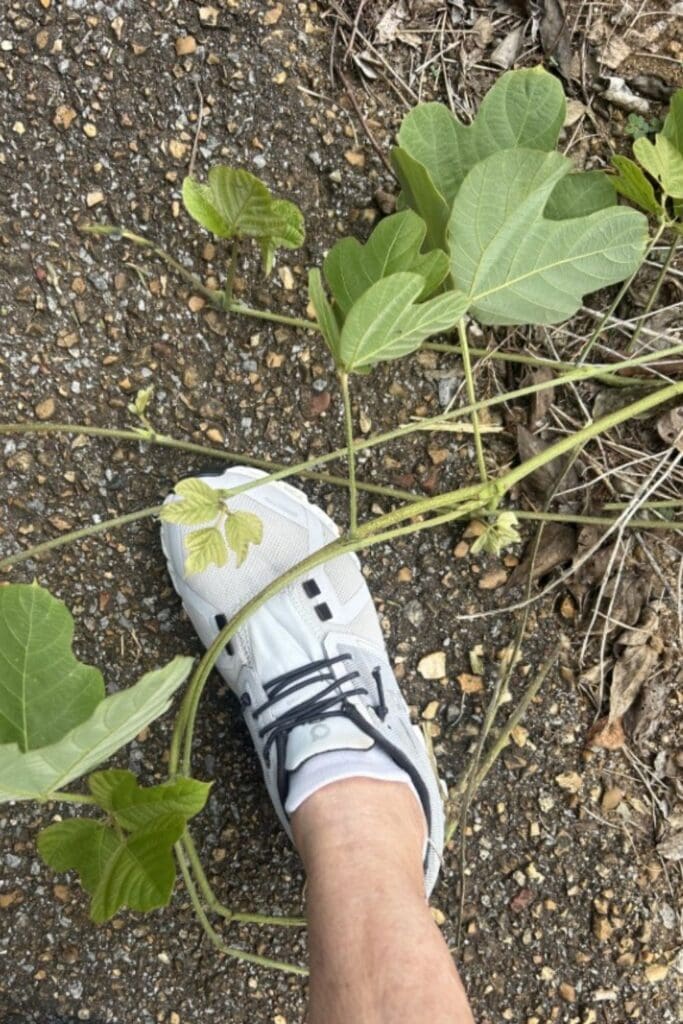
I snapped this photo on the Tanglefoot Trail, and yes—that kudzu runner was making a break for it right across the path. My husband used to joke that it grew while we slept, and honestly? He might’ve been right. It’s like the vine has a built-in GPS for any patch of ground that looks remotely maintained.
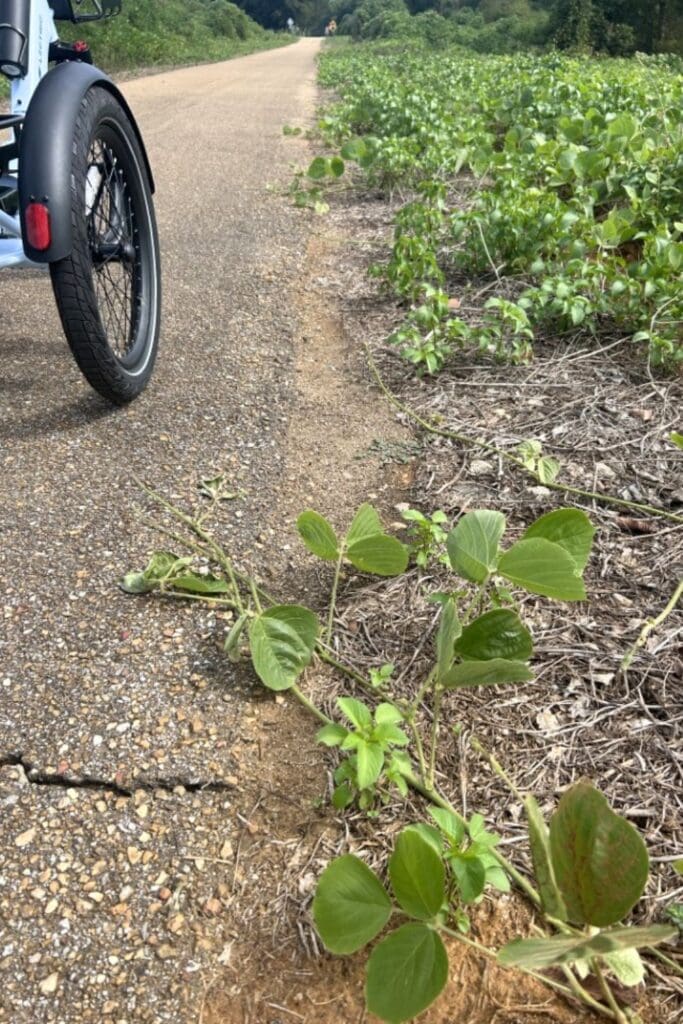
And just in case you think I’m exaggerating—here’s proof. I barely stood still long enough to snap a photo before the kudzu started trying to claim me. It may not actually grow a foot a day in every yard. But when you’re surrounded by it, it sure feels like it.
So if you’re biking the Tanglefoot Trail, or just mowing your lawn near a patch of the stuff—don’t linger too long. Kudzu’s always watching. And it’s got plans.