
I Wasn’t Crazy: The Basic Seven Food Groups Were Real
How Nutrition Advice Has Changed From the 1950s to Today
I knew I wasn’t imagining it.
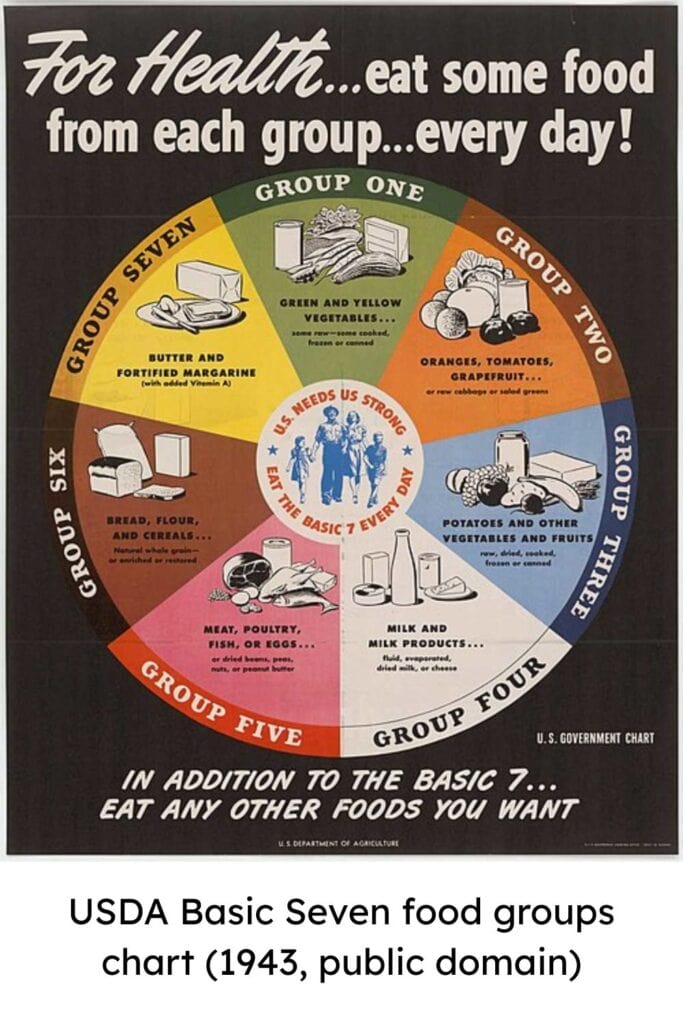
Years ago, the topic of the Seven Basic Food Groups came up in conversation, and I was met with puzzled looks—like I had completely made it up. Someone even said, “That was never a thing.” I let it go, but I never quite forgot it.
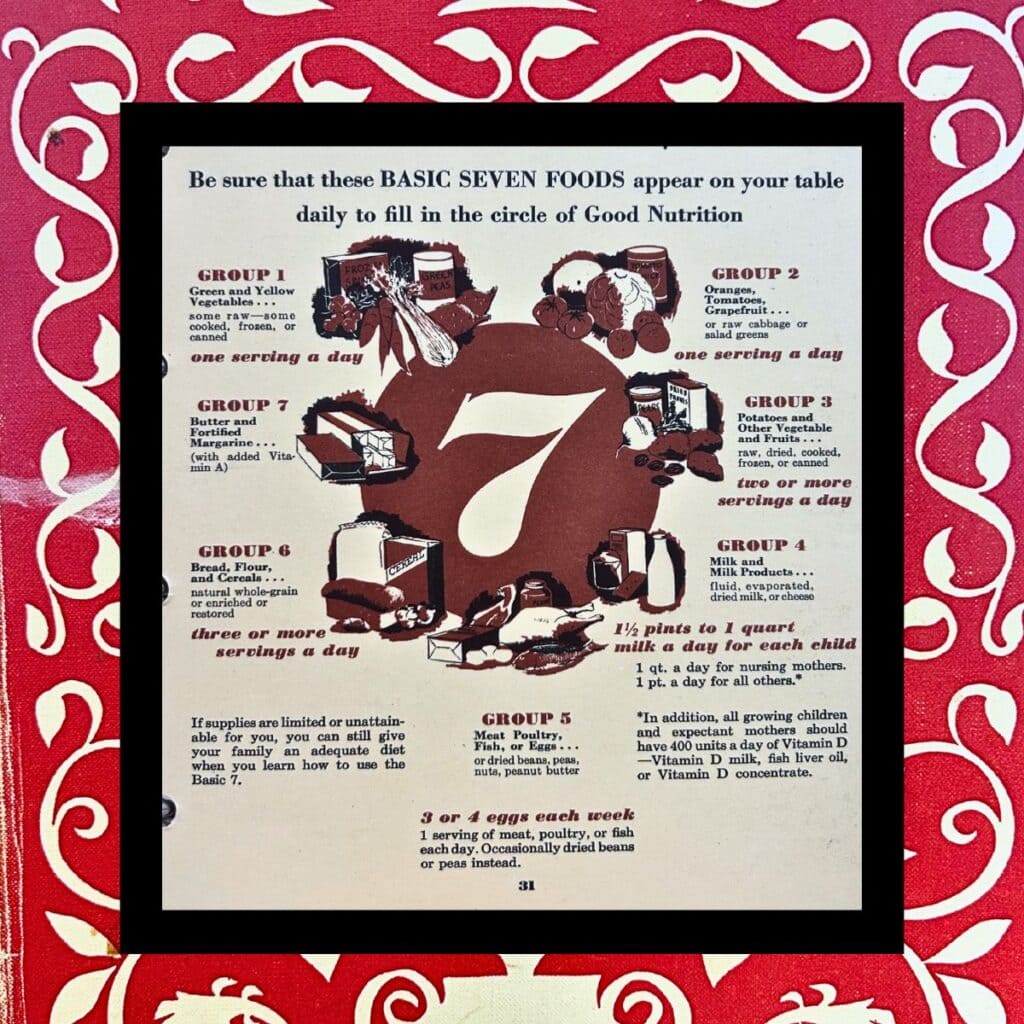
Recently, I was flipping through my mom’s old Betty Crocker Picture Cookbook from the 1950s. It’s a book I’ve browsed for years, and yet I always seem to notice something new. This time, I came across the page on the Basic Seven Foods, and it got me thinking about how much nutrition advice has changed over the years. From the Basic Seven to today’s MyPlate, the recommendations have evolved—and no, I wasn’t crazy.
The Part That Might Surprise You
When you look closely at the Seven Basic Food Groups, some of the recommendations feel surprisingly generous by today’s standards. For example, three or more servings of bread or cereal each day was encouraged, along with a full pint of milk daily. Eggs were limited to three or four per week, and perhaps most surprising of all, only one serving of meat, poultry, or fish per day was considered enough.
These guidelines weren’t about cutting back or counting calories—they were designed to make sure people were getting enough nourishment during a time when food availability and nutrition deficiencies were real concerns. Seen through that lens, the advice makes sense, even if it looks very different from what we’re told today.
The Shift to the Basic Four
Not long after the era of the Basic Seven, nutrition advice began to simplify. By the mid-1950s, the seven food groups were condensed into what became known as the Basic Four Food Groups. The focus shifted away from individual vitamins and toward broader categories that were easier to teach, remember, and apply to everyday meals.
The Basic Four included:
- Milk
- Meat
- Fruits and vegetables
- Bread and cereals
Butter, margarine, and other fats quietly disappeared as their own category—not because they vanished from the American diet, but because they were no longer considered essential nutrients. This model shaped how many of us learned about food in school cafeterias and health classes through the 1960s and into the 1970s.
The goal was still nourishment, not weight loss. Calories weren’t the concern they would later become. Instead, the emphasis remained on eating a variety of foods and making sure meals were balanced enough to support growing bodies and busy lives.
The Food Pyramid Era
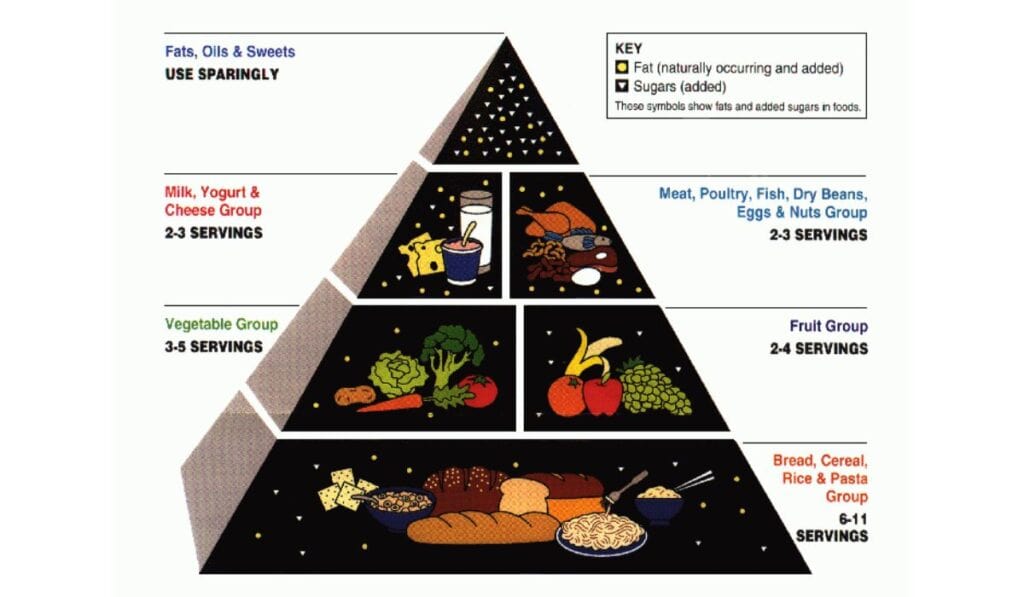
In the early 1990s, the Food Pyramid showed up and suddenly we all had a new chart to look at. This time it wasn’t just food groups—it was a pyramid, with grains taking up the biggest spot at the bottom and fats and sweets way up at the top. The takeaway was simple enough: eat lots of bread and cereal, don’t be afraid of carbs, and go easy on fat.
Most of us really tried to follow that advice. Low-fat foods were everywhere, and for a while it felt like pasta, bagels, and cereal were practically health foods. Looking back, though, that’s also when a lot of “low-fat” products were packed with sugar and highly processed ingredients. At the same time, portion sizes were creeping up, even if we didn’t notice it happening.
The Food Pyramid probably wasn’t the reason weight issues became more common, but it definitely showed up during a time when the way we ate was changing fast. It made sense then, based on what we knew at the time—but like a lot of nutrition advice, it didn’t age quite the way we expected.
Enter MyPlate
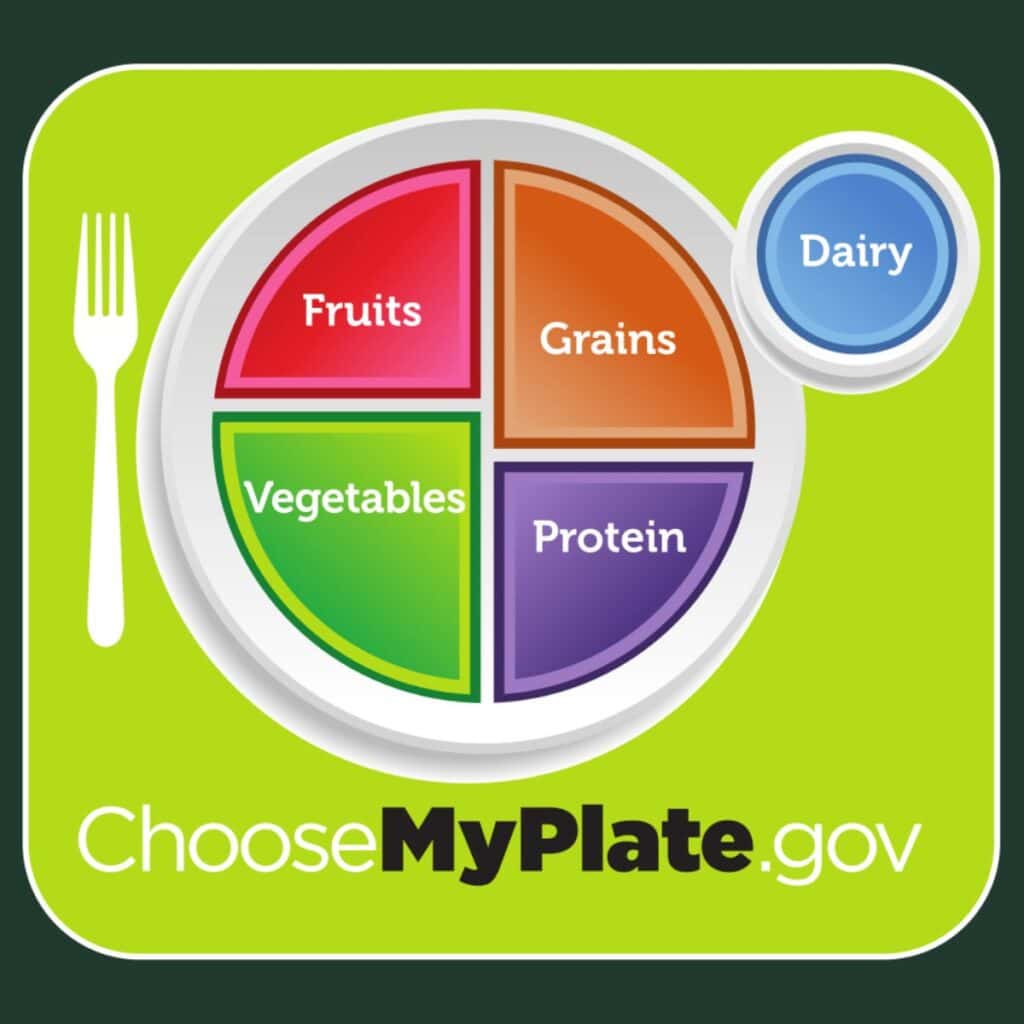
Then there’s MyPlate—the current version of nutrition advice. I’ll be honest, I don’t remember ever really noticing this chart until I started researching this post. Maybe you’re the same way. It made me wonder… is this new, or have I just not been paying attention?
As it turns out, MyPlate has been around since 2011, quietly replacing the Food Pyramid. Instead of charts and serving sizes, it shows a simple plate divided into sections—fruits, vegetables, grains, protein, with dairy on the side. No pyramid, no math, no long lists. Just a visual reminder to balance what’s on your plate.
Unlike earlier guidelines, MyPlate feels less strict and more flexible. There’s no emphasis on counting servings or avoiding certain foods altogether. Maybe that’s why it hasn’t made as big of an impression—it doesn’t shout instructions the way earlier food charts did. It’s more of a gentle nudge than a rulebook.
When you stop and think about it, the jump from the Basic Seven food groups of the 1950s to MyPlate today is pretty amazing. Back then, nutrition advice lived in cookbooks and school classrooms. If you wanted to know what counted as a balanced meal, you looked it up—or someone told you—and that was the end of the discussion. Now? You can ask Alexa what to make for dinner, and she’ll answer without even judging your choices. Here’s a link if you would like to learn more about MyPlate and Alexa.
Rules We Followed Because… That’s What We Were Told
“Eat 6–11 servings of grains a day.”
Pasta, bagels, and cereal once felt like health food—as long as they were low-fat.
“Fat is the enemy.”
Butter was bad, margarine was good, and sugar quietly slipped in to save the flavor.
“Drink a pint of milk every day.”
Milk was practically a requirement, whether you liked it or not.
“Go easy on eggs.”
Three or four a week was the rule—now eggs have made a full comeback.
“Margarine is healthier than butter.”
This one really didn’t hold up.
And Now for the Question Nobody Asked Out Loud
Of course, it does make you wonder who’s been in charge of changing the rules all these years. Scientists? Nutrition experts? Government panels? Or maybe a few entrepreneurs with very good timing and very big food factories. Probably a mix of all of them. Research changes, trends shift, and somehow the grocery store shelves seem to change right along with the advice.
Most of us weren’t digging into studies or asking tough questions—we were just trying to put dinner on the table and follow the latest “right way” to eat. And honestly, if there’s one thing we’ve learned, it’s that today’s nutrition rules may be tomorrow’s “Well… maybe not.”
Now if you’ll excuse me, I think I need to go ask Alexa what she thinks we should have for dinner tonight.

